


A balcony is an exposed space that is constantly subject to the direct impact of rain, sun, temperature and high humidity, especially in major urban areas such as Ho Chi Minh City, Binh Duong, Dong Nai and the southern provinces of Vietnam.
Water infiltration on a balcony not only ruins its appearance but also damages the concrete structure, seriously affecting quality of life and the building’s value. If you are looking for a durable balcony waterproofing solution, the article below from the Euro Paint Vietnam team of experts provides full technical information, the application process and the most suitable material choices for each type of project.
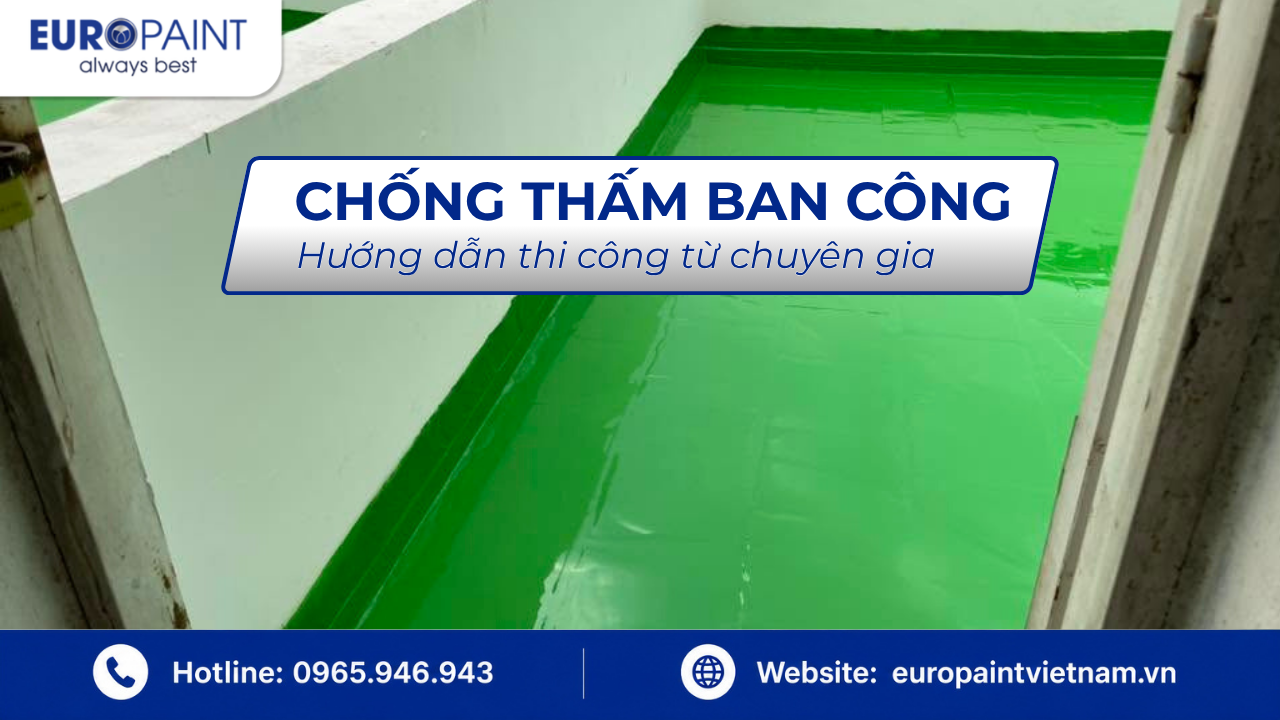
Why Balconies Are Prone to Water Infiltration and the Consequences
A balcony is a particularly sensitive location in a building’s structure. Unlike indoor areas, a balcony faces the full range of harsh weather factors: heavy rain, intense sun, seasonal thermal expansion and continuously high air humidity. This is why balcony waterproofing is considered one of the top-priority items when building or renovating a home.
Common causes of water infiltration on balconies include:
- Micro-cracks in the concrete floor: Concrete shrinkage after pouring, or long-term use loads, create small cracks – the main pathway for water into the structure.
- Poor drainage: Insufficient floor slope and blocked drain outlets cause water to pool and gradually soak into the concrete.
- The joint between floor and wall: The junction between the balcony floor and the vertical wall is the weakest point and is often overlooked during initial construction.
- Poor-quality waterproofing materials or incorrect application: Using products unsuitable for exposed conditions or not preparing the surface correctly before application.
- The old waterproofing layer has reached the end of its life: The original waterproofing layer, after 5–10 years, usually ages, loses elasticity and can no longer block water.
The consequences of not carrying out balcony waterproofing correctly are severe: the concrete corrodes, the reinforcement rusts, the ceiling of the floor below becomes stained, and walls crack and peel. Over the long term, this shortens the building’s service life and generates repair costs far higher than investing in waterproofing from the outset.
Learn more about common infiltration problems and how to treat them thoroughly in the article exposed-balcony waterproofing – an in-depth solution for outdoor spaces.
The Most Popular and Effective Balcony Waterproofing Materials
Choosing the right material determines 70% of the success of a balcony waterproofing system. There are many types of materials on the market today, each with its own advantages and disadvantages suited to different project conditions.
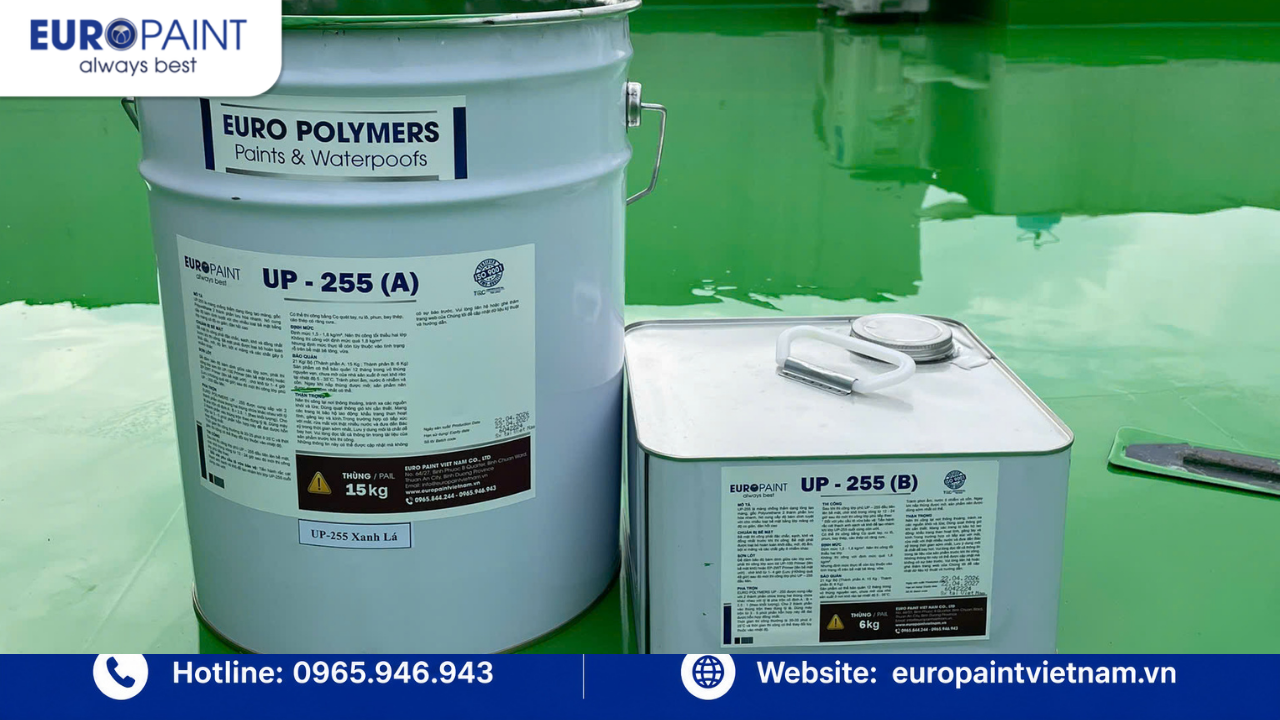
1. Polyurethane Waterproofing Paint – The Premium Solution for Balcony Floors
For exposed balcony floors – which bear foot traffic and direct UV exposure – Euro Paint Vietnam’s Polyurethane product line is the superior choice:
- Euro Polymers UP-100 Primer: A solvent-based Polyurethane primer that boosts adhesion on concrete surfaces with moisture not exceeding 7%.
- Euro Polymers UP-255: A two-component Polyurethane waterproofing coating, suitable for exposed balcony floors when combined with the UP-266 topcoat. Available in gray, green and many other colors.
- Euro Polymers UP-266 Top Coat: A two-component, UV-resistant Polyurethane topcoat that protects the waterproofing layer beneath from aging due to sunlight, available in many colors: white, gray, green, bronze-yellow.
To better understand the advantages of each material line, refer to the article Acrylic vs Polyurethane comparison – a detailed analysis to help you choose the right product for your project.
2. Polyurea – The Most Advanced Waterproofing Technology
For balconies with high technical requirements or large areas, Euro Polymers UREA-900N (cold-applied, two-component Polyurea) delivers outstanding waterproofing with high mechanical durability, chemical resistance and the ability to be applied on many surface types including water tanks and wet areas.
Comparing Balcony Waterproofing Materials
| Criteria | Polyurethane (UP-255) | Polyurea (UREA-900N) |
|---|---|---|
| Main application | Exposed balcony floors | Premium floors, tanks, wet areas |
| UV resistance | Very good (with UP-266 topcoat) | Excellent |
| Elasticity | High | Very high |
| Components | 2-component, solvent-based | 2-component, cold-applied |
| Application time | Moderate | Requires high skill |
| Relative cost | Medium – high | Premium |
| Expected service life | 10–15 years | 15–20 years |
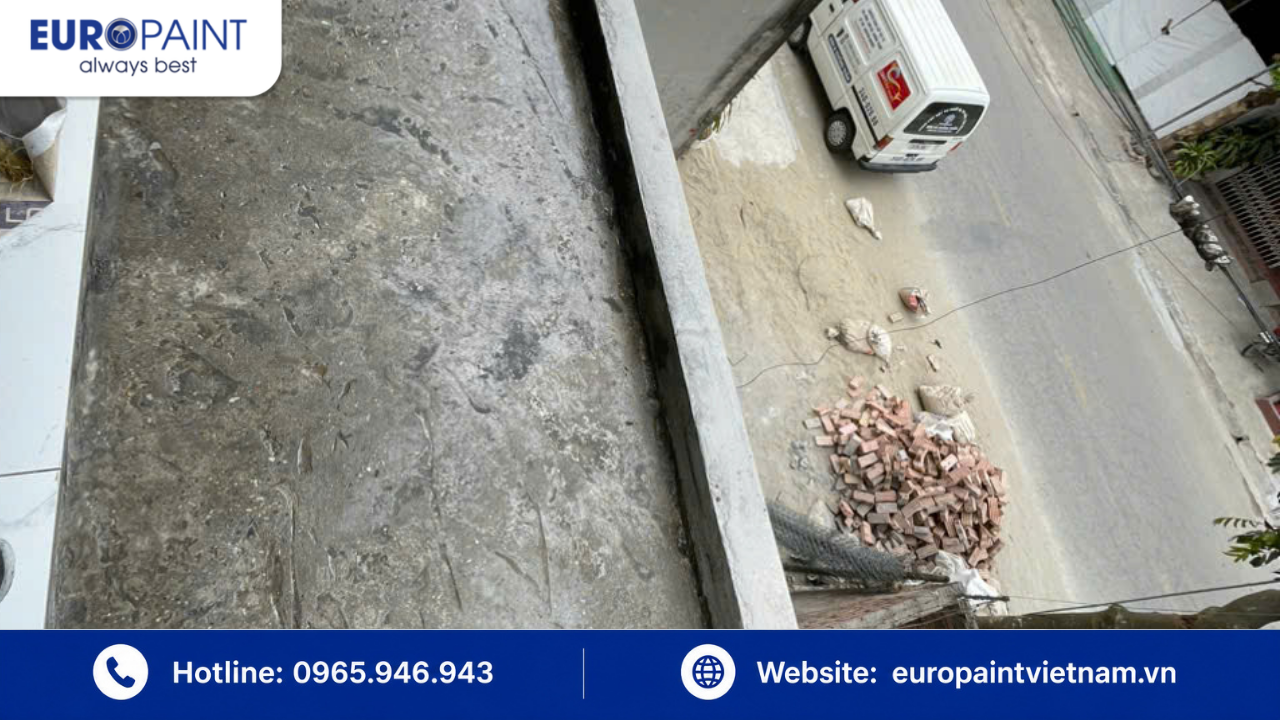
The Correct Technical Process for Balcony Waterproofing
A durable balcony waterproofing system depends not only on material quality but very much on the application process. Below is the standard process the Euro Paint Vietnam engineering team applies to real projects:
Step 1: Survey and Condition Assessment
Before application, the engineer surveys the entire balcony surface: checking concrete moisture (with a moisture meter), identifying the location and degree of cracking, evaluating the drainage system, and determining the most suitable material for the actual conditions.
Step 2: Substrate Surface Preparation
This is the most important step, determining the adhesion of the waterproofing layer. Surface preparation includes:
- Cleaning off all dust, grease and peeling old paint with a grinder or sandblasting.
- Filling large cracks with Euro Polymers Epoxy D-200 (a two-component Epoxy injection resin for dry cracks) or Eco Stone DK-4500S (a two-component, gray Epoxy substrate filler).
- Treating the internal corner at the floor–wall junction with specialized mortar, forming a cove so the waterproofing material adheres evenly.
- Ensuring the surface is dry and flat before applying the primer.
Step 3: Apply the Primer
The primer boosts adhesion between the concrete surface and the main waterproofing layer. Depending on the waterproofing material chosen:
- Polyurethane system: Use Euro Polymers UP-100 Primer – applied to surfaces with moisture not exceeding 7%.
Step 4: Apply the Main Waterproofing Layer
This is the most important layer in the balcony waterproofing system. Apply it at the manufacturer’s recommended coverage rate, usually in 2–3 coats, allowing each coat to dry completely before the next. Pay special attention to reinforcing with geotextile fabric at large cracks, internal corners and joints.
Step 5: Apply the Protective Topcoat
For exposed balcony floors, the Euro Polymers UP-266 Top Coat (a two-component, UV-resistant Polyurethane) is mandatory to protect the waterproofing layer beneath from UV rays and harsh weather. The topcoat also gives the balcony surface an attractive color.
Step 6: Inspection and Acceptance
After application, perform a water test by holding water on the balcony floor surface for at least 24–48 hours to check the tightness of the waterproofing system before handover.
Refer in more detail to the standard waterproofing application process to Euro Paint Vietnam’s technical standards to ensure optimal project quality.
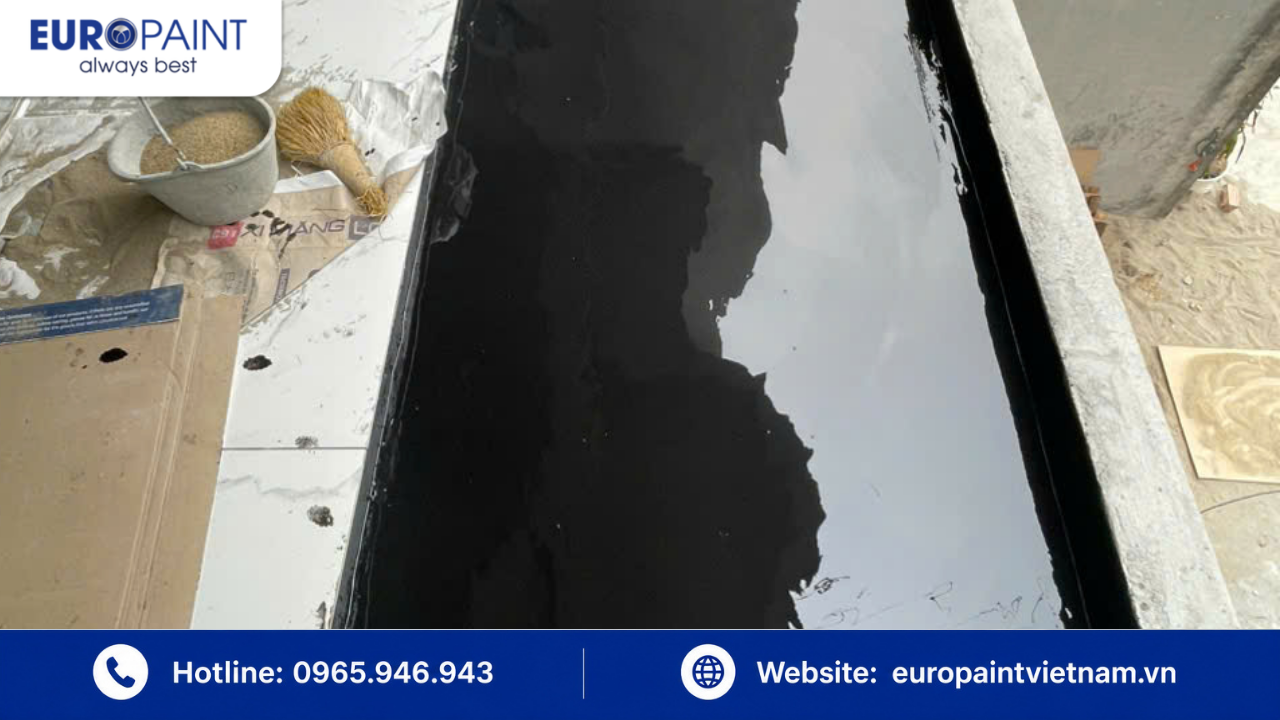
Common Mistakes in Balcony Waterproofing and How to Fix Them
Many projects carry out balcony waterproofing but still leak again after a short time due to these common technical mistakes:
- Not preparing the surface carefully before application: Dust, grease or old paint on the surface prevents the waterproofing material from adhering, leading to early peeling. Solution: always clean and roughen the surface before application.
- Skipping the primer: Many applicators skip this step to save cost, resulting in a waterproofing layer that does not adhere firmly to the concrete. Solution: always apply the primer suited to the chosen material system.
- Not reinforcing at internal corners and joints: These are the weakest points of the waterproofing system. Solution: use geotextile fabric or waterproofing tape at these locations before applying the main layer.
- Applying while the surface is still damp: Excessive concrete moisture will ruin a solvent-based waterproofing layer. Solution: measure moisture with a dedicated meter and only apply when moisture meets the requirement (below 7% for the solvent-based Polyurethane system).
- Choosing the wrong material: Using wall waterproofing paint for an exposed floor or vice versa. Solution: consult a specialist engineer before choosing materials.
If you are facing balcony walls with staining and infiltration, also see the article on water-infiltrated walls to understand the causes and comprehensive treatment.
Balcony Waterproofing Costs – Factors Affecting the Price
The cost of balcony waterproofing depends on many factors, including the application area, the current level of damage, the chosen material and the project’s geographic conditions. Below is a reference table of estimated costs:
| Item | Materials used | Estimated cost (VND/m²) | Suitable for |
|---|---|---|---|
| Balcony wall waterproofing | AC-100 + AC-250 + AC-300 | 80,000 – 150,000 | Homes, apartments |
| Exposed balcony floor waterproofing | UP-100 + UP-255 + UP-266 | 180,000 – 300,000 | Homes, villas, offices |
| Premium balcony waterproofing | Polyurea UREA-900N | 350,000 – 600,000 | Villas, premium projects |
| Crack treatment + filling | Epoxy D-200 / DK-4500S | 50,000 – 120,000 | All project types |
Note: The price table above is for reference only. Actual costs may vary depending on the specific conditions of each project. Contact Euro Paint Vietnam for a free, accurate survey and quote.
See also terrace waterproofing pricing for more basis to compare and plan a suitable budget for your project.
Conclusion
Balcony waterproofing is a technical item that cannot be taken lightly in any construction or renovation project. A properly designed waterproofing system, applied with correct technique and high-quality materials, will protect your building for 10–20 years, significantly saving repair costs in the long run.
In summary, the core points to remember when carrying out balcony waterproofing:
- Correctly identify the cause of infiltration before choosing a solution.
- Choose materials suited to the location (wall or floor, exposed or non-exposed).
- Do not skip surface preparation and primer application.
- Reinforce especially at weak points: internal corners, joints, drain outlets.
- Always apply a UV-resistant topcoat for exposed balcony floors.
- Verify with a water test before handover.
With over 20 years’ experience in waterproofing and industrial flooring, Euro Paint Vietnam is proud to be the trusted partner of thousands of contractors, investors and applicators nationwide. The Euro Polymers product line fully meets international standards and is proven through real-world application at projects large and small across Vietnam.
Explore all of Euro Paint Vietnam’s liquid-applied membrane waterproofing paints to find the most suitable solution for each location in your project.
🏗️ Get FREE Consulting & Sample Testing from Euro Paint Vietnam
Are you facing a balcony waterproofing problem and unsure where to start? Our professional engineering team is ready to survey on site, advise on a suitable solution and provide free test samples for your project.
- 📞 Hotline / Zalo: 0965.946.943
- 🌐 Website: europaintvietnam.vn
- 📧 Email: info@europaintvietnam.vn
- 📍 Address: 64/27 KP Binh Phuoc B, An Phu Ward, Ho Chi Minh City
Fill in the form on the website to receive a quote & catalogue within 24h or Chat on Zalo now for pricing & product technical documents. EURO PAINT | PIONEERING SOLUTIONS – SUPERIOR QUALITY